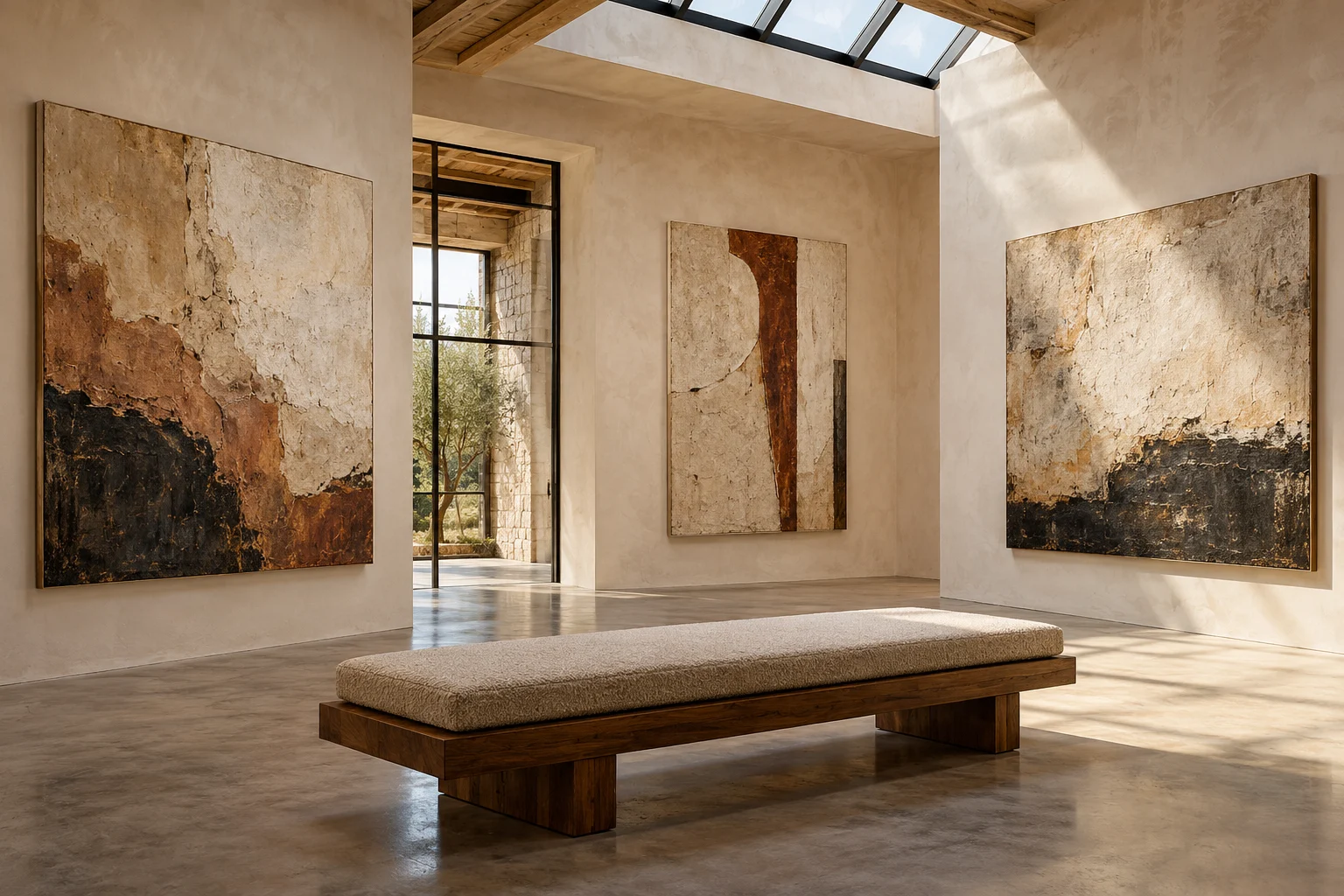
A heavy frame leans against a studio wall, holding a canvas that stops abruptly in a swirl of ochre and deep violet. There is a tactile quality to the brushstrokes—thick, rhythmic ridges of paint that catch the light as you move past. To a casual observer, the abrupt termination of the color feels like a sudden silence in a song, leaving a sense of unresolved tension in the room.
The Gap Between Sight and Intent
When we look at a piece of art, we often build a narrative based on what our eyes catch. You might see a landscape struggling to emerge from a storm, or perhaps a study of light hitting a textured surface. These are personal responses, rooted in your own history and visual vocabulary. However, these observations exist in a different realm than the creator’s stated explanation. An artist might describe the same work as an exploration of geometric balance or a reaction to a specific movement in the city. The friction between what you feel and what they say is where the conversation actually lives.
Managing an Inherited Vision
This tension becomes more complex when you are not just a viewer, but a steward of an unfinished plan. Imagine you have inherited a collection of sketches, half-finished sculptures, or a series of conceptual notes left behind by a family member or a former colleague. You are left with the weight of a vision that was never fully realized. You face a difficult tradeoff: do you preserve the work in its incomplete, raw state, or do you attempt to facilitate its completion?
For example, if you possess a set of architectural drawings for a community garden that stopped at the irrigation phase, you must decide if the value lies in the original, unbuilt dream or in a functional, modified version that fits the current neighborhood. To honor the creator is to respect the pause; to evolve the work is to acknowledge that time and community needs have shifted.
Questions for the Next Phase
Navigating these unfinished legacies requires more than just aesthetic judgment. If you are considering bringing a dormant project to life, you might need to consult with those who understand the technicalities of realization. Ask a specialist how the original intent can be translated into a modern context without losing its core identity. If the project involves physical structures or public spaces, ask which local standards apply to a revision of an existing plan and who would be responsible for managing the transition from concept to reality.
The goal is not to find the "right" way to finish what was started, but to decide how you will inhabit the space between the original thought and the present moment. Whether you choose to leave the canvas as it is or seek a way to complete the pattern, the decision rests on how you weigh the creator's ghost against the living needs of the community around you.